Authorized retailer · USA Authorized GlycoEden Retailer 200 mg blend · 30 servings a bottle Droppers, not drops +1 (302) 200-3480 Lot GLY-26/GO-6566

Official product information

GlycoEden Guides and Free Reading

Two guides, three posts, a method for reading any label, and the eleven federal pages this website is built on.

Written and reviewed by the GlycoEden Editorial Desk · Last updated September 22, 2026

Quick answer

This section collects the free reading on this website: a guide to what the blood support category is, a seven-step check to run before you buy, and three posts on the unit a dropper label uses, what an extract ratio means, and what the federal pages say about the named botanicals. None of it is medical advice.

Overview

What is in this section

Two guides, three posts, a five-minute method for reading any label, and the federal pages this website is built on.

Five pieces of free reading, none about buying anything. Two are long guides to the category; three are shorter posts on single ideas that came up while we were transcribing this label.

They exist because most of what makes a supplement decision go wrong happens before you reach a product page. Nothing here is medical advice, and nothing here claims a supplement treats, prevents or manages a condition.

Reading

The two long guides

The blood support supplement guide

What the category actually is, which is less settled than the shelf suggests. “ Blood support” is not a regulatory term but a marketing one, and products sold into it range from single botanicals to blends of a dozen ingredients. The guide covers which botanicals keep appearing, what a structure/function claim may say, and where the legal line sits between describing support and claiming treatment. For: anyone who has read a label and wondered why the wording feels so careful.
Choosing a blood support supplement

A seven-step check to run before you pay: is there a Supplement Facts panel at all, are individual amounts published, are ratios and species printed, do the dosing instructions agree across the label and the marketing, is there a price before checkout, is the refund window stated in days, and is there a document behind any certificate code. It ends by running GlycoEden through its own checklist, where it fails three of the seven. For: anyone comparing products.

Blog

Three shorter posts

Drops versus dropperfuls

The unit problem at length. The panel on this bottle puts two droppers at about 2 mL, which makes one dropper about a millilitre, while a drop from a pipette is a fraction of that. The post explains how to tell which one a label means, and what to do when a product’s own materials disagree — as this one’s do. For: anyone about to take a first dose from a dropper bottle.

What a 30:1 extract ratio actually means

Thirty parts of raw plant reduced to one part of extract, and what that does and does not tell you about strength: why a ratio is not a dose, how a standardisation percentage differs from one, and why printing either puts a label ahead of most of its category. For: anyone who has seen 10:1 on a bottle and skipped past it.

Berberine, bitter melon and ashwagandha: what the evidence says

Three federal summaries read end to end and quoted rather than paraphrased, including the parts that are warnings rather than findings: what NCCIH reports about berberine and who should not use it, what it concludes about the herbal supplements studied for diabetes, and the ashwagandha page with its rare liver-injury reports. For: anyone weighing up the ingredients in a blend.

All posts in the blog →

Method

How to read any supplement label in five minutes

Five steps that work on any bottle in any shop.

  1. Find the Supplement Facts panel, and notice if there is not one

    A supplement sold in the US carries one. If a product page shows marketing prose and no panel at all, you have learned the most important thing about it in ten seconds.

  2. Read the serving size before anything else

    Every number on the panel describes one serving, and the serving is whatever the manufacturer says it is. Two droppers and two capsules are not comparable until you know what each panel counts.

  3. Check whether amounts are per ingredient or per blend

    One number against the word blend is a proprietary blend: a single total for several ingredients. US rules allow it provided they are listed in descending order by weight, so you learn the order and no more.

  4. Look for ratios, species and plant parts

    The marks of a label that has bothered. A species tells you which plant, a plant part which bit of it, and a ratio how concentrated the extract is. Most labels print none of the three.

  5. Read the directions, then compare them with the marketing

    The step that catches the largest errors and the one nobody does. Read the dose off the bottle, read it off the product page, and check they are the same instruction in the same unit. Where they differ, the label is the regulated document.

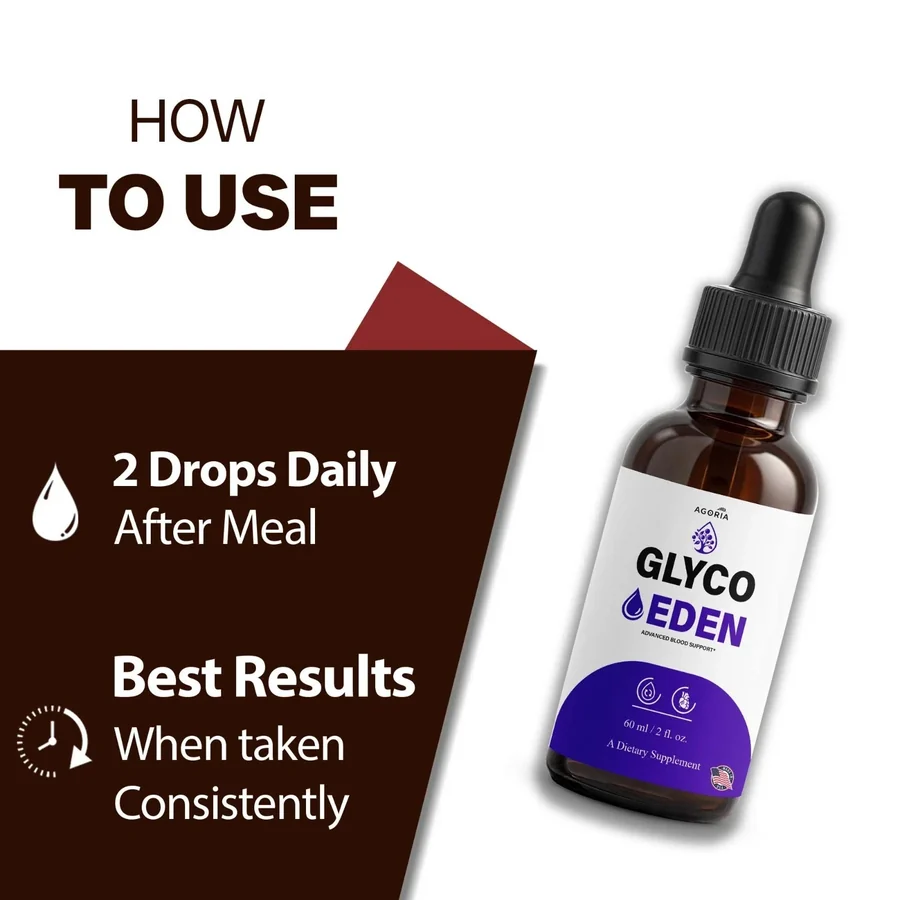
The seller's how-to-use panel for GlycoEden, reading two drops daily after meal
Step five, illustrated. This panel and the bottle’s own directions do not agree, and the bottle is the one to follow.

Where the facts come from

The federal sources this site relies on

Every outside source this website uses: eleven US government or national-body pages, opened and read on September 22, 2026. None of them studied this product.
SourceWhat it answersWhere this site uses it
In the News: Berberine
National Center for Complementary and Integrative Health
What berberine is, and what is reported about itThe ingredient pages.
Berberine and Weight Loss: What You Need To Know
National Center for Complementary and Integrative Health
Which plants contain berberine, and a named drug interactionThe safety pages, for the cyclosporine example.
Ashwagandha
National Center for Complementary and Integrative Health
What ashwagandha is, what it is studied for, who should avoid itThe safety and ingredient pages.
Diabetes and Dietary Supplements: What You Need To Know
National Center for Complementary and Integrative Health
Whether supplements help with diabetes, and bitter melon researchThe benefits and how-it-works pages.
5 Things To Know About Type 2 Diabetes and Dietary Supplements
National Center for Complementary and Integrative Health
The two instructions to follow if you have diabetesEvery page that touches blood sugar, and the footer.
Illegally Sold Diabetes Treatments
U.S. Food and Drug Administration
What the FDA says about products sold as diabetes treatmentsThe scam question on the home page.
Blood Glucose
MedlinePlus, U.S. National Library of Medicine
What blood glucose is, and the usual target rangesThe category guide.
Dietary Supplements: What You Need to Know
NIH Office of Dietary Supplements
What a dietary supplement is, and how they are regulatedThe about page and the guides.
Information for Consumers on Using Dietary Supplements
U.S. Food and Drug Administration
Consumer guidance, and why no supplement is FDA approvedThe testing page, where each seal is taken apart.
Using Dietary Supplements Wisely
National Center for Complementary and Integrative Health
How to use supplements sensibly alongside medical careThe safety pages and the choosing guide.
Botanical Dietary Supplements: Background Information
NIH Office of Dietary Supplements
Background on botanicals, extracts and standardisationThe extract ratio post and the ingredients page.

One ingredient with no federal page

There is no federal plain-language summary for black pepper extract or for piperine, the compound it is standardised for. So this site cites nothing for it, and says so rather than reaching for a weaker source to fill the row. What can be said without a citation is what the industry does with it: it is included as an absorption aid, and anything that changes how much of one substance reaches the blood can do the same for a medicine you already take.

Two rules govern that table. We quote these pages in their own words, because a paraphrase is where a careful finding quietly becomes a claim. And we cite pages you can open in one click rather than study identifiers, because we do not print references we have not read.

Limits

What this reading will not tell you

  • None of these pages studied this product. Each is about an ingredient or about supplements in general. No trial of this blend has been published, and a page about berberine is not a page about a four-extract blend.
  • They do not say the ingredients work. The federal page covering this category concludes that research on these herbal supplements has been limited and has not proven them effective.
  • They are not a substitute for your own clinician. NCCIH’s instruction on diabetes comes in two halves: talk with your health care provider before taking a dietary supplement, and do not take one instead of your diabetes medicine.
  • They change. Federal pages are revised as evidence accumulates. Everything here was read on September 22, 2026.

What they are good for is the opposite of a product claim: they say what is known, what is uncertain and who should be careful.

Reading order

Where to start, depending on why you are here

New to the category

Start with the category guide, then the label method above with a bottle in your hand.

Comparing two or three products

The seven-step check, built to be run side by side.

Worried about an interaction

Take the four ingredients to a pharmacist. The safety page sets out what to raise.

Deciding whether to trust a rating

The reviews page: five checks, and this seller’s own arithmetic.

In short

Three things worth carrying away

The label outranks the marketing. The Supplement Facts panel and the directions on the bottle are the regulated document. A square image on a listing page is not, and on this product the two disagree about the dose in a way that matters.

A blend total is not an ingredient amount. 200 mg across four extracts, one an absorption aid, tells you the order they appear in by weight and no more.

A gap you can see beats a figure you cannot check. No price, no guarantee length, no per-ingredient amount and no certificate document were supplied to us, and this site prints all four absences rather than filling them in.

Questions

GlycoEden FAQ: guides questions

What does 30:1 mean on the berberine line?

It is an extract ratio. A 30:1 extract means thirty parts of raw root were reduced to one part of extract. The “5%” that follows is a standardisation figure. Printing either is unusual on a label in this category, and printing both is rarer still.

Is 200 mg a lot?

It is a larger blend total than most droppers in this category print, and it is still one number split four ways - one of which, the black pepper extract, is an absorption aid rather than an active ingredient. Published ashwagandha work uses hundreds of milligrams of that single extract.

Why is black pepper in it?

Black pepper extract is standardised for piperine and is almost always included in supplements as an absorption aid rather than for its own effect. Nothing on this label claims anything for it. The flip side is worth knowing: something that helps one substance reach the blood can do the same for a medicine you already take.

What does “Daily Value not established” mean?

It means no US reference intake exists for these botanicals, so the panel cannot print a percentage. It is a normal and honest line on a herbal label, not a warning - but it does mean there is no official yardstick to measure 200 mg against.

References

Sources for this page

  1. National Center for Complementary and Integrative Health. In the News: Berberine. www.nccih.nih.gov. Accessed September 22, 2026.
  2. National Center for Complementary and Integrative Health. Berberine and Weight Loss: What You Need To Know. www.nccih.nih.gov. Accessed September 22, 2026.
  3. National Center for Complementary and Integrative Health. Ashwagandha. www.nccih.nih.gov. Accessed September 22, 2026.
  4. National Center for Complementary and Integrative Health. Diabetes and Dietary Supplements: What You Need To Know. www.nccih.nih.gov. Accessed September 22, 2026.
  5. National Center for Complementary and Integrative Health. 5 Things To Know About Type 2 Diabetes and Dietary Supplements. www.nccih.nih.gov. Accessed September 22, 2026.
  6. U.S. Food and Drug Administration. Illegally Sold Diabetes Treatments. www.fda.gov. Accessed September 22, 2026.
  7. MedlinePlus, U.S. National Library of Medicine. Blood Glucose. medlineplus.gov. Accessed September 22, 2026.
  8. NIH Office of Dietary Supplements. Dietary Supplements: What You Need to Know. ods.od.nih.gov. Accessed September 22, 2026.
  9. U.S. Food and Drug Administration. Information for Consumers on Using Dietary Supplements. www.fda.gov. Accessed September 22, 2026.
  10. National Center for Complementary and Integrative Health. Using Dietary Supplements Wisely. www.nccih.nih.gov. Accessed September 22, 2026.
  11. NIH Office of Dietary Supplements. Botanical Dietary Supplements: Background Information. ods.od.nih.gov. Accessed September 22, 2026.

Order GlycoEden from the official page

Liquid drops, 60 ml / 2 fl. oz., 30 servings at the panel’s two-dropper serving. Prices and the money-back window are on the listing. Order desk +1 (302) 200-3480.

Price and money-back window on the listing · ships from inside the US · order desk +1 (302) 200-3480

GlycoEden — 200 mg blend, 30 servings a bottle Money-back window on the listing · price shown at checkout
Order now