Official product information
GlycoEden Reviews: What Is Published, and What We Would Not Print
The seller publishes a score, a star split and two counts. We publish them as the seller’s, show two places where they do not hold together, and print no testimony at all.
Written and reviewed by the GlycoEden Editorial Desk · Last updated September 22, 2026
Quick answer
The seller publishes 4.7 / 5 from 1,083 written reviews against 8,814 orders, with 91% saying they recommend it — unverified figures of the seller’s own. This site carries no customer reviews and no rating in its structured data, for two reasons: the eight named buyers supplied to us share three sentences between them, and the published star split weights out nearer 4.5 than the printed 4.7.
The seller’s figures
What the GlycoEden seller publishes about its own reviews
Four numbers and a star split, all of them the seller’s.
There are no customer reviews on this page, and that is a decision rather than an oversight. What follows is the seller’s own summary, printed as the seller’s, and then two problems with it. The figures came with the product pack: we did not collect them and cannot verify one of them.
The seller’s figures, not ours
What the GlycoEden listing publishes
And what we would not print
The pack we were given lists eight buyers by first name, age and city. Three of those eight carry the same sentence word for word, three more share a second, and the remaining two share a third. Eight people did not independently write three sentences. That is layout copy with names typed over it, and publishing it as testimony would be inventing customers. So this page carries none of it, and the structured data on this site contains no rating.
How we source a factTwo of those lines are not results. The seller reports that most buyers waited 4 to 8 weeks before judging the product, and that the most ordered pack is 6 bottles. The first describes patience, the second what sold.
Problem one
The seller’s own numbers do not quite agree with each other
The sum in full, so you can check it.
| Rating | Share of written reviews | Contribution to the average |
|---|---|---|
| 5 star | 66% | 5 × 0.66 = 3.30 |
| 4 star | 21% | 4 × 0.21 = 0.84 |
| 3 star | 8% | 3 × 0.08 = 0.24 |
| 2 star | 3% | 2 × 0.03 = 0.06 |
| 1 star | 2% | 1 × 0.02 = 0.02 |
| All five | 100% | 4.46 |
There is a second problem, and it is arithmetic rather than judgement. The published star split is 66 / 21 / 8 / 3 / 2. Weight those out and the average lands near 4.5, not the 4.7 printed above it. Two of the seller’s own numbers disagree, and we would rather point that out than average them for you.
What we are not saying
We are not saying the score is invented. The split may be rounded to whole percentages; the headline may cover a different set of ratings than the written reviews the split describes; the two may have been produced at different times and never reconciled. From outside we cannot choose between them.
What we can say is narrower: as published, side by side, the two numbers do not agree, and nothing supplied to us explains why. We would rather leave that open than quietly average it for you. It is also the one check on a rating a reader can run unaided, and it takes a minute on a phone.
Problem two
Eight named buyers, three sentences between them
The second problem is not arithmetic. The testimony supplied to us repeats itself.
The same material carries eight buyers, each with a first name, an age, a city and a sentence of praise. None of them appears on this site, in any form.
Three of the eight carry the same sentence, word for word. Three more share a second. The last two share a third. Eight people in eight cities did not independently produce three sentences between them.
What that describes is a layout: a block built to hold eight testimonials, filled with three pieces of specimen copy, then given names, ages and cities so it would look populated. Ordinary in a marketing pack. Not testimony, and publishing it as though buyers had written it would be inventing customers. Keeping one copy of each sentence and dropping the duplicates would not help: it would still present three strangers as having chosen those words.
And why there is no rating in the code
This site’s structured data contains no rating. No AggregateRating, no Review markup, nothing that would let a search engine print stars beside these pages. Structured data is a claim made to a machine, and it is not one we can make.
The pack we were given lists eight buyers by first name, age and city. Three of those eight carry the same sentence word for word, three more share a second, and the remaining two share a third. Eight people did not independently write three sentences. That is layout copy with names typed over it, and publishing it as testimony would be inventing customers. So this page carries none of it, and the structured data on this site contains no rating.
as the average score
weighted out
published on this site
structured data
The useful part
How to judge a supplement rating anywhere, including this one
Five checks that work on any product page and cost nothing but a few minutes. One of them caught the block on this one.
Most of what follows has nothing to do with this product. These are the checks we run on any supplement page before taking its rating seriously.
1. Look for a verified-purchase badge, and know what it promises
It means the platform can tie that review to an order it processed. It does not mean the reviewer was sincere or finished the bottle. What it rules out is the cheapest kind of fake: a review by somebody who never bought anything. On a seller’s own website there is usually no badge at all, because the seller is both shop and referee — a reason to weight those reviews below ones with an order database behind them.
2. Read the shape of the distribution before the average
The average is one number and hides almost everything. The split is five numbers and tells you what kind of product you are looking at. Two products can both average 4.4: one where nearly everybody rates it four or five, and one where half rate it five and a fifth rate it one. The second works for some people and fails for others, and the only useful question is which group you would be in.
A steady slide from five stars to one is the ordinary shape. A tall spike at five with a smaller one at one is a divided product. A near-perfect distribution with almost nothing below four is unusual, and unusual deserves a second look.
3. Watch for phrasing that repeats
The check that caught the block above, and it needs no tools. Read five or six reviews in a row and watch for shared rhythm, structure or an unusual word choice. Genuine reviews are untidy: people misspell things, wander off, complain about the packaging halfway through praising the product. Copy written to fill a layout is neat, on-message and much the same length every time.
4. Distrust a page with no one-star reviews
This reads backwards to most people, so plainly: a product with some one-star reviews is more credible than one with none. Anything taken by thousands of people disappoints somebody. If none of that appears, the likeliest explanation is not perfection but that the unflattering reviews are not shown to you.
Read the low ones first, and sort them into complaints about the service and about the product. Late parcels tell you about the seller. Reports that nothing happened tell you about the product, and here they matter: noticing nothing is an ordinary outcome for a daily botanical.
5. Do not treat a low review count as a warning
The seller publishes 1,083 written reviews against 8,814 orders — roughly one buyer in eight. That gap is sometimes read as a sign the missing seven were unhappy and silent. It is not. Writing a review is unpaid work done for strangers, and in most retail categories only a small minority of buyers ever do it. The suspicious shape is the opposite one: a count sitting implausibly close to the order count, or growing in sudden blocks rather than steadily.
What a count does tell you is roughly how much traffic a product has had, which matters when you are judging whether a rating is a signal or three people in a good mood.
Our method
What this site publishes instead of testimony
A page not built out of testimony has to be built out of the label: the panel transcribed line by line, the directions quoted word for word, the four ingredients set against the federal summaries that exist for three of them, and a list of what nobody has published. In place of stars there is an editorial score, labelled as our opinion and a middling one.
Three things we will not do: write reviews, republish the eight names in any form, or put a rating in this site’s structured data. If a verifiable review set appears later, this page will say so.
Next steps
If you have already bought it
If you already have a bottle, the most useful review you can write names three things: which end of the label’s dose range you took — the bottle directs one or two droppers full daily, which are different amounts and different bottle lifetimes — how long you gave it, and what you were comparing against.
If something went wrong with the order, the order desk is on +1 (302) 200-3480. If you have found an error here, including in the arithmetic above, the website desk is at [email protected]. And if you are still deciding, read the how-to-use page before you read any rating anywhere: the dose contradiction here is a larger practical problem than the difference between 4.5 and 4.7.
Questions
GlycoEden FAQ: reviews questions
Why are there no reviews on this site?
Because three of the eight named buyers in the material supplied to us say the same sentence word for word, three more share a second, and the last two share a third. The seller’s own published figures are on our reviews page, labelled as the seller’s, and nothing is presented as testimony.
How long does GlycoEden take to work?
No timeline is published by the seller as a policy, and no trial of this formula exists. The seller’s own listing summary says most buyers waited four to eight weeks. Four weeks is about one bottle at two droppers a day, which makes it the natural first checkpoint.
What should I expect in week one?
The habit, and nothing more. The most common complaint in the seller’s own review summary is a slow start and wanting more to happen in week one, which is what a daily botanical looks like from the inside.
Does it work for everyone?
No supplement does, and this one has no published trial on it at all. Everything on this site is about what the label contains, not about what it will do for you.
References
Sources for this page
- National Center for Complementary and Integrative Health. 5 Things To Know About Type 2 Diabetes and Dietary Supplements. www.nccih.nih.gov. Accessed September 22, 2026.
- U.S. Food and Drug Administration. Illegally Sold Diabetes Treatments. www.fda.gov. Accessed September 22, 2026.
- NIH Office of Dietary Supplements. Dietary Supplements: What You Need to Know. ods.od.nih.gov. Accessed September 22, 2026.
Order GlycoEden from the official page
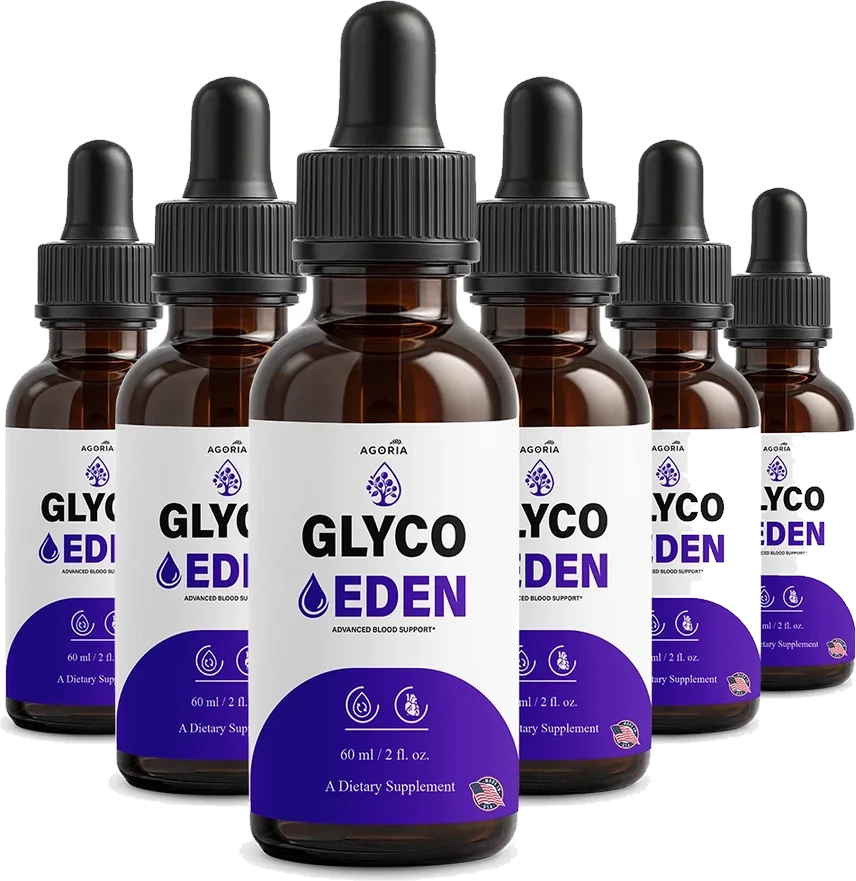
Liquid drops, 60 ml / 2 fl. oz., 30 servings at the panel’s two-dropper serving. Price and money-back window on the listing. Order desk +1 (302) 200-3480.
Price and money-back window on the listing · ships from inside the US · order desk +1 (302) 200-3480