Good Manufacturing Practice
A process mark. It describes how a factory keeps records, cleans between runs and documents a batch. It says nothing about whether this formula works, and it is not an approval of this product.
Official product information
Every seal on the packaging and every phrase on the panels, explained as what it is. Then ten testing questions nobody has answered.
Written and reviewed by the GlycoEden Editorial Desk · Last updated September 22, 2026
Quick answer
The GlycoEden packaging carries four seals — GMP, FDA-registered facility, foreign and domestic ingredients, and money back — plus a Made in USA flag on the front and three marketing phrases on the seller’s panels. None of them is a test of the liquid in your bottle, and no dietary supplement is FDA approved. “Natural & Safe” is marketing: safe is a claim no supplement can make about everyone, and NCCIH’s note on ashwagandha shows why. The lot and certificate codes are reference codes with no document behind them.
Start here
Four seals appear on the GlycoEden packaging, and four more phrases appear on the front of the bottle and on the seller’s listing panels. This page takes all eight apart.
The general rule first, because it saves reading eight times over. A seal on a supplement describes a process, a registration or a promise. None of them describes a test of the liquid in the bottle you receive. That is not cynicism; it is how the category works. A factory can keep immaculate records and make a product with no evidence behind it, and both can be true of the same bottle.
The second rule matters more here than usual. No dietary supplement is FDA approved. The FDA is not authorised to approve supplements for safety and effectiveness before they are sold, so a roundel reading “FDA-registered facility” describes a factory’s paperwork rather than this product.
Marks
Each one as what it is, rather than as what it is meant to make you feel.
A process mark. It describes how a factory keeps records, cleans between runs and documents a batch. It says nothing about whether this formula works, and it is not an approval of this product.
Facilities that make supplements are required to register with the FDA. This describes a registration, not an inspection result and not an approval. No dietary supplement is FDA approved, and that matters more than usual on a product sold into the blood-sugar category.
An unusually candid mark. It says openly that some raw material is imported, which sits a little oddly next to the small Made in USA flag on the front of the bottle. Both can be true at once: the filling is domestic, some of the plant material is not.
Points at a refund window that no supplied document states the length of. Read the window on the marketplace listing before you pay, screenshot it, and keep the order email.
The foreign-and-domestic ingredients seal, and it is not close. It is the only one that tells you something a seller would rather you did not dwell on, and a mark that costs its owner something is worth more than one that does not.
The money-back seal is worth the least — not because a refund promise is worthless, but because no supplied document states how long the window is. A seal pointing at a policy nobody published is a picture of a policy. Read the length on the listing before you pay and screenshot it with the date showing. Our guarantee page →
Marketing marks
Four phrases that look like quality marks and are not.
A small flag roundel on the front of the bottle. It describes where the bottle was filled, not where the berberine, bitter melon or ashwagandha were grown - and the packaging’s own foreign-and-domestic seal says some of that material is imported.
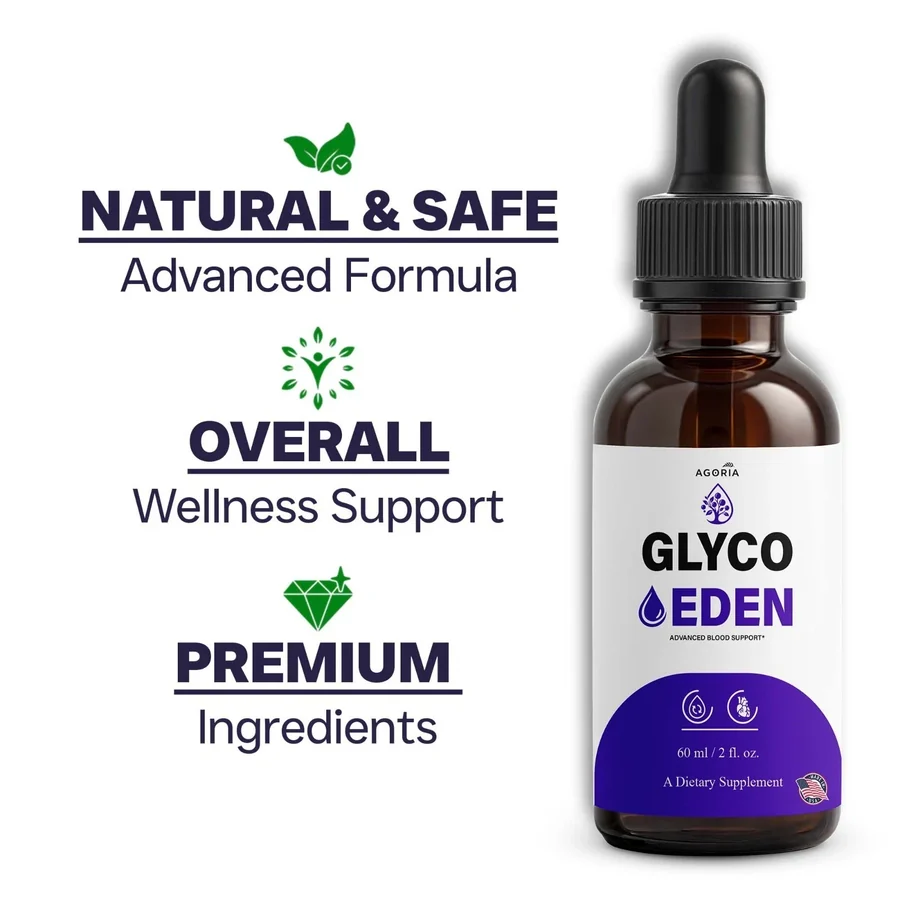
Printed on a listing panel, not on the bottle. “Natural” has no fixed legal meaning on a US supplement label, and “safe” is a claim no supplement is in a position to make about every person who will take it. NCCIH’s own safety note on ashwagandha is on our safety page.
A marketing phrase. Nothing about the formula is described as advanced anywhere in the material we were given, and no comparison is made to anything.
Also a marketing phrase. The label does give real specifics - a named species, a plant part and two extract ratios - and those are the things worth judging the ingredients on, not the word premium.
Two of those are printed on the bottle and two only on the seller’s listing panels. That difference matters: the bottle is a regulated label and a square marketing image is not. Where the two disagree on this product, the bottle wins — which is the whole argument of our how-to-use page.
The honest section
The seller’s formula panel leads with “Natural & Safe — Advanced Formula”. It is the phrase on this product we would most like removed, and it is worth being specific about why.
The word has no fixed legal meaning on a US supplement label. It does not mean unprocessed, it does not mean grown rather than made, and nothing is required to back it. A 30:1 extract is a concentrated industrial preparation; calling it natural is not false, it is simply not information.
This is the one that matters. Safe is a claim no supplement is in a position to make about everyone who will take it, and this formula shows exactly why. NCCIH records that although it is rare, there have been a number of cases that link liver injury to ashwagandha supplements, and that ashwagandha may be safe when taken in the short term, up to three months. It lists people who are pregnant, people about to undergo surgery, people with autoimmune or thyroid disorders and people with hormone-sensitive prostate cancer as at risk.
The bottle itself is more careful than the panel. Its caution names pregnant or nursing mothers, children under 18 and individuals with a known medical condition. A label that prints a caution and a panel that prints the word “safe” describe the same product, and only one of them is being straight with you. The full safety page →
The tension
On the front of the bottle there is a small Made in USA flag roundel. On the packaging there is a seal reading foreign and domestic ingredients. At a glance those look like a contradiction. They are not, and understanding why tells you something useful about every supplement you will buy.
Both can be true at once. “Made in” generally describes where a product was manufactured — here, where the liquid was blended and the bottles filled. It does not describe where the plants were grown. Berberine comes from Berberis aristata, bitter melon is a tropical crop, and ashwagandha is, in NCCIH’s own description, an evergreen shrub found in parts of India, Africa and the Middle East. Expecting all of that to have been farmed domestically would be unrealistic.
So the two marks together say: blended and bottled in the United States, from plant material that is partly imported. The foreign-and-domestic seal is the more candid of the two for saying the quiet part out loud.
The tension is in the emphasis rather than the facts. The flag is on the front of the bottle, where a buyer sees it first; the disclosure sits with the other packaging marks. It is worth noticing which of the two got the better spot. What neither tells you is where any specific ingredient was grown, because no country of origin is published for any of the four, and we are not going to guess one.
The gaps
| The question | The published answer |
|---|---|
| Which laboratory tested this batch? | Not published. |
| Was the finished liquid tested, or only the incoming raw extracts? | Not published. |
| Was the identity of each of the four botanicals confirmed by testing? | Not published. |
| Was the batch screened for heavy metals? | Not published. |
| Was the finished liquid screened for microbiological contamination? | Not published. |
| How does the 200 mg divide across the four extracts? | Not published. The panel declares one blend total and no individual amount. |
| Was the berberine verified against the printed 30:1 ratio and 5% standardisation? | Not published. |
| Where were the botanicals grown? | Not published. The packaging seal confirms only that some material is imported and some domestic. |
| Who manufactured it, and at what address? | Not published anywhere. No manufacturer or distributor address appears on the label artwork supplied to us. |
| What is the best-before date? | None appears on the artwork. Check the base of the bottle you receive. |
We are not claiming these tests were not carried out. We are saying no answer to any of them was supplied, and a buyer has no way to check.
Row nine. Most supplement labels carry at least a “distributed by” line with a company and a town on it; this one carries none. The brand mark Agoria is printed above the wordmark and that is the extent of it. A label that goes to the trouble of printing extract ratios — genuinely rare — and then omits an address is an odd combination, and it is the single thing on this packaging we would most like changed.
Two codes were supplied that look, at a glance, like an answer to this table. Lot GLY-26/GO-6566 and certificate GLY-6566-26-GO are reference codes with no document behind them, and our batch page says exactly what they are worth.
Questions
No dietary supplement is. The FDA is not authorised to approve supplements for safety and effectiveness before they are sold. A seal reading “FDA-registered facility” describes a factory’s registration, not this product.
It means no US reference intake exists for these botanicals, so the panel cannot print a percentage. It is a normal and honest line on a herbal label, not a warning - but it does mean there is no official yardstick to measure 200 mg against.
The brand mark printed above the wordmark on the label is Agoria. No manufacturer address, distributor line or factory is named anywhere in the material supplied to us, which is unusual - most labels carry at least a “distributed by” line.
Purified water, vegetable glycerin, citric acid, potassium sorbate and sodium benzoate. Potassium sorbate and sodium benzoate are the preservatives; citric acid is the acidity regulator; the glycerin is the base. There is no sweetener on the list, which is worth noting on a product taken by mouth.
Four extracts, in the order the panel prints them: Berberine HCL (Berberis aristata) Extract 30:1 (root) 5%, Bitter Melon 10:1 Extract, Ashwagandha Extract 10:1 (Withania somnifera), and Black Pepper Extract. The blend total is 200 mg per serving.
The bottle artwork supplied with the product, the seller’s two listing panels, and the seller’s own detailed pack. Where any two disagree, the label wins - which is why this site tells you to take droppers rather than drops.
References
Next
What the lot and certificate codes are, and how to check a bottle on arrival.
Read it →Every line of the Supplement Facts panel, transcribed off the bottle.
Read it →Why the word “safe” on a panel does not survive the sources.
Read it →Liquid drops, 60 ml / 2 fl. oz., 30 servings at the panel’s two-dropper serving. Prices and the money-back window are on the listing. Order desk +1 (302) 200-3480.
Price and money-back window on the listing · ships from inside the US · order desk +1 (302) 200-3480