Official product information
The Blood Support Supplement Guide
What the category is, which botanicals keep appearing on it, what US law lets any of them say, and where reading a label stops being the useful thing to do.
Written and reviewed by the GlycoEden Editorial Desk · Last updated September 22, 2026
Quick answer
“Blood support” is a shelf heading rather than a regulated category: no federal definition, no required ingredient, no threshold. Products under it may make structure and function claims but not disease claims, and each must print the FDA disclaimer in full. The same handful of ingredients recurs, so the real differences are amounts, extract forms and how much the label discloses. Daily Value is “not established” for botanicals because they are not nutrients. And NCCIH is firm: talk with your health care provider before taking a supplement if you have diabetes, and do not take one instead of your diabetes medicine.
Start here
What “blood support” means on a US shelf
“Blood support” is not a regulated category. There is no federal definition of it, no ingredient a product must contain to use the phrase, and no threshold it has to clear. It is a shelf heading, useful to everybody except the person reading it.
The vagueness is deliberate. A supplement in the United States may describe an effect on the normal structure or function of the body. It may not say it treats, prevents, cures or manages a disease. “Blood support” sits exactly on the permitted side of that line: it gestures at what a shopper is thinking about without naming it, and nothing in the phrase is a claim anyone could be asked to prove.
So the heading is a location, not a promise. Two products under it can share no ingredients at all and both be labelled correctly. Judging one against another means ignoring the heading and reading the panel underneath.
The shelf
The ingredients that keep appearing
| Ingredient | What it is | What the federal pages say |
|---|---|---|
| Berberine | A compound rather than a plant. NCCIH calls it “a substance found in a variety of plants”. | NCCIH says it “may have a modest effect on lowering blood glucose levels in people with type 2 diabetes”, and lists nausea and vomiting among the most common adverse effects. |
| Bitter melon | A tropical vine grown as a food crop; the fruit is eaten as a vegetable. | NCCIH lists it among the herbal supplements studied here: “research has been limited … and hasn’t proven that any of these herbal supplements are effective”. |
| Cinnamon | A kitchen spice, sold here as a powder or an extract. | NCCIH says “a few dietary supplements, such as chromium, cinnamon, or berberine, might help improve blood sugar control”, with the evidence still insufficient for definitive conclusions. |
| Chromium | A mineral rather than a plant extract. | In that same NCCIH sentence, with the same qualification attached. |
| Alpha-lipoic acid | A frequent inclusion, usually on its own line rather than inside a blend. | No federal plain-language page covering it appears among the sources we have read, so we say nothing further. |
| Gymnema | A botanical, one of the oldest names on this shelf. | Again, none of the federal pages we have read covers it. Better a half-empty row than one filled from memory. |
Two of the six have no citable federal summary.
Pick up six bottles and you will usually find four of those six. Novelty is rare: a “new” formula is almost always recombining a known set. So the differences between products are not about what is in them. They are about how much, in what form, and whether the label says. How GlycoEden declares its own four →
The rules
What US law lets these products say — and what it does not
Three rules shape almost every word on a supplement label.
Structure and function claims are allowed
A product may say it supports, maintains or helps a normal body structure or function. Permitted, and vague by design. The manufacturer is responsible for holding substantiation, but nothing is reviewed before sale and the substantiation is never published.
The disclaimer is compulsory
Any label carrying such a claim must also print, in full: *These statements have not been evaluated by the Food and Drug Administration. This product is not intended to diagnose, treat, cure or prevent any disease. That is the most accurate sentence on the package.
Disease claims are not allowed
No supplement may say it treats, prevents, cures or manages a disease. That includes diabetes by name and the softer constructions meaning the same thing: reversing a diagnosis, replacing a prescription, normalising a measurement. The FDA keeps a standing page on illegally sold diabetes treatments, which says “FDA has not evaluated or approved these products as safe and effective in treating diabetes”.
And no label may claim approval, because no dietary supplement is FDA approved. A roundel reading “FDA-registered facility” describes a factory’s registration, a requirement rather than an achievement.
Reading the panel
Why Daily Value is “not established” for botanicals
Every botanical panel carries the same footnote: “Daily Value not established.” It is among the most misread lines in the category.
A Daily Value is a reference intake. It exists for nutrients the body needs in known amounts, and for those a panel can print a percentage that means something. Botanicals have no such reference, because nobody requires berberine in a day. No percentage can be printed.
It is not a warning and not a mark against the product. But it leaves you without a yardstick: a milligram figure with no percentage beside it has nothing official to be measured against.
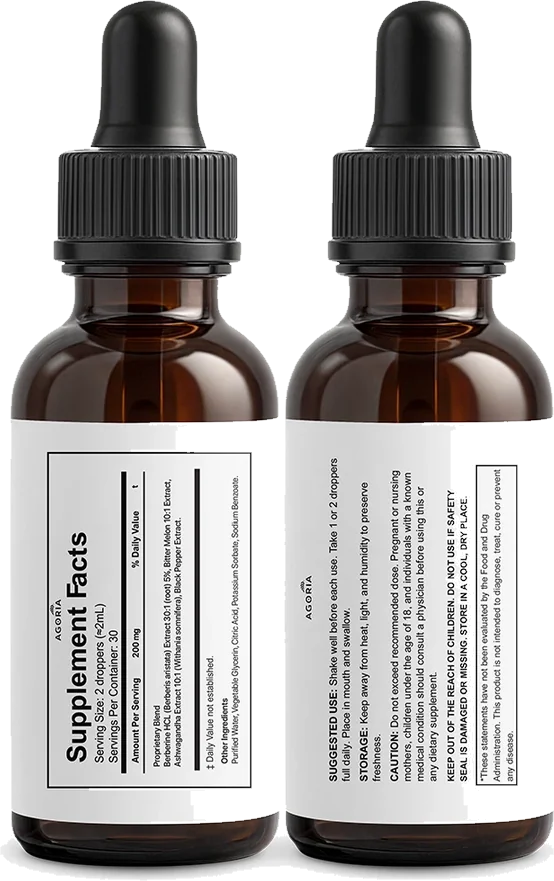
The big fork
Proprietary blends versus full panels
The biggest fork in the category, and visible in four seconds. A full panel gives every active its own amount. A proprietary blend gives one total for all of them, which US rules permit on one condition: the ingredients must be listed in descending order by weight.
That order is the only information a blend gives you, and it is not nothing. First name largest, last smallest. You will not learn by how much: a 200 mg blend could be 170 / 15 / 10 / 5 or 55 / 50 / 50 / 45, and both are declared identically.
The stated reason for blends is recipe protection, a real commercial argument. The unstated reason, sometimes, is that the split would not survive being read: a headline ingredient present in a token amount looks respectable inside a blend and thin outside one. From the shelf you cannot tell which you hold.
Three things still work. Read the order, and ask whether the ingredient the marketing is built around is near the front. Notice the passengers, since an absorption aid still takes a share. And compare the whole total against single-ingredient products, where published work often uses several hundred milligrams of one extract alone. How this product’s panel handles it →
Reading the panel
Extract ratios and standardisation, in plain terms
A figure written as 10:1 or 30:1 is an extract ratio: how much raw plant material went in for each part of extract that came out. A larger first number means a more concentrated preparation.
What a ratio does not do is make two products comparable. Ratios depend on solvent, plant part and process, and two manufacturers’ 10:1 extracts need not be the same thing. A printed ratio is evidence somebody was willing to describe the preparation, not a unit of strength.
A figure such as 5% beside a named compound is a standardisation: the extract has been adjusted so a fixed proportion of it is that compound. Stronger information than a ratio, because it describes the finished material rather than the process, and rarer.
Two more lines are worth hunting for: plant part, because root and bark are chemically different materials, and species, because common names cover several plants.
The four-line test
Species, plant part, extract ratio, standardisation. Count how many of the four a label prints for its headline ingredient. Four is exceptional. Three is good. Zero is ordinary, and ordinary is why this shelf is so hard to shop.
The honest section
Where the shelf stops and a clinician starts
Everything above is about reading a label well. Whether you should be reading one at all belongs somewhere else.
MedlinePlus puts the measurement plainly: “blood glucose, or blood sugar, is the main sugar found in your blood. It is your body’s primary source of energy.” For people with diabetes it gives targets — “before a meal: 80 to 130 mg/dL”, “two hours after the start of a meal: less than 180 mg/dL” — and adds that “low blood glucose can be dangerous and should be treated as soon as possible”.
A measurement with targets attached, and a state that can be dangerous in either direction, is clinical territory. NCCIH gives two instructions, quoted here in full:
The two lines to carry around this shelf
“If you have diabetes, talk with your health care provider before taking a dietary supplement.”
“Don’t take a dietary supplement instead of your diabetes medicine.”
The broader NCCIH review is blunter still: “for most supplements, there isn’t evidence to support a beneficial effect on diabetes or its complications,” and “it’s very important not to replace medical treatment for diabetes with an unproven health product or practice.”
None of that makes a supplement here a bad purchase. It makes it a smaller decision than the marketing implies. A shelf can be read carefully. It cannot be read instead.
Putting it together
Reading a label in five minutes
Put it together and a label takes five minutes. Ignore the shelf heading and the front of the bottle. Find the panel; if the listing images do not show one, you are being asked to buy something you have not been shown. Check the serving size against the servings per container and the stated volume. Decide whether it is a full panel or a blend, and if a blend, read the order. Score the headline ingredient out of four on species, part, ratio and standardisation. Then check that the directions on the bottle and the directions on the marketing images agree, in the same unit.
That last step catches more problems than the other five combined. The companion guide turns this into a seven-step check and runs it on GlycoEden, which passes four and fails three. Run the seven-step check →
Questions
GlycoEden FAQ: blood support guide questions
Does it treat diabetes?
No. It is a dietary supplement, not a treatment for any condition, and the label carries the FDA footnote saying so. The FDA maintains a page on illegally sold diabetes treatments because products in this space sometimes imply otherwise; a product that claimed to treat diabetes would be breaking the law.
Is it FDA approved?
No dietary supplement is. The FDA is not authorised to approve supplements for safety and effectiveness before they are sold. A seal reading “FDA-registered facility” describes a factory’s registration, not this product.
What does “Daily Value not established” mean?
It means no US reference intake exists for these botanicals, so the panel cannot print a percentage. It is a normal and honest line on a herbal label, not a warning - but it does mean there is no official yardstick to measure 200 mg against.
How much of each ingredient is in it?
Not published. “Proprietary Blend” means the manufacturer declares one total instead of four amounts. US rules allow it, provided the ingredients are listed in descending order by weight - which tells you berberine is the largest share and black pepper the smallest, and nothing more.
What does 30:1 mean on the berberine line?
It is an extract ratio. A 30:1 extract means thirty parts of raw root were reduced to one part of extract. The “5%” that follows is a standardisation figure. Printing either is unusual on a label in this category, and printing both is rarer still.
References
Sources for this page
- National Center for Complementary and Integrative Health. 5 Things To Know About Type 2 Diabetes and Dietary Supplements. www.nccih.nih.gov. Accessed September 22, 2026.
- National Center for Complementary and Integrative Health. Diabetes and Dietary Supplements: What You Need To Know. www.nccih.nih.gov. Accessed September 22, 2026.
- National Center for Complementary and Integrative Health. In the News: Berberine. www.nccih.nih.gov. Accessed September 22, 2026.
- U.S. Food and Drug Administration. Illegally Sold Diabetes Treatments. www.fda.gov. Accessed September 22, 2026.
- MedlinePlus, U.S. National Library of Medicine. Blood Glucose. medlineplus.gov. Accessed September 22, 2026.
Order GlycoEden from the official page
Liquid drops, 60 ml / 2 fl. oz., 30 servings at the panel’s two-dropper serving, and a 200 mg proprietary blend of four named extracts. Read the panel before the front of the bottle. Order desk +1 (302) 200-3480.
Price and money-back window on the listing · ships from inside the US · order desk +1 (302) 200-3480