Official product information
How Does GlycoEden Work?
A map of the GlycoEden formula built from the federal summaries of its four ingredients, and a clear statement of where the published record stops.
Written and reviewed by the GlycoEden Editorial Desk · Last updated September 22, 2026
Quick answer
GlycoEden is a 200 mg blend of four extracts in a liquid base. Berberine HCL is first and largest; NCCIH says it “may have a modest effect on lowering blood glucose levels in people with type 2 diabetes” and that plants containing it are being studied. Bitter melon is the traditional partner, and NCCIH’s conclusion for that group is that research “hasn’t proven that any of these herbal supplements are effective”. Ashwagandha’s research record is about insomnia and stress. Black pepper extract is an absorption aid. No trial of this formula exists, a mechanism is not a claim, and nothing here suggests the product does anything to a blood measurement.
The straight answer
How does GlycoEden work?
A map of the formula, and a clear statement of what a map is not.
The honest answer comes in two halves, and the second matters more.
The first is that the formula has a shape. Four extracts in a published weight order, one clearly the lead and one not an active at all. Each of the three actives has a reason for being in a product of this kind, and for two of them there is a federal summary you can read in a couple of minutes. That is a map, and this page draws it.
The second half is that a map is not a claim. No trial of this formula has been published. No amount is printed for any single ingredient. Nothing here should be read as a statement that GlycoEden does anything to a blood measurement, because the label makes no such claim, US law would not permit one, and we have nothing that would support it.
What follows describes what the formula is built from and what is known about each part in isolation. Where the mainstream position is “research has not proven this”, it is printed in the same size type as everything else.
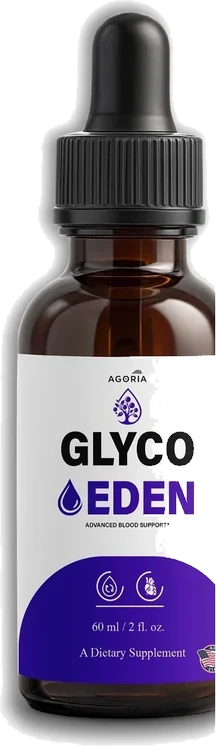
Ingredient one
Berberine: first in the blend, and the reason the product exists
Berberine HCL is first on the blend line, which makes it the largest share of the 200 mg by weight. It is also the only ingredient given a named species, a plant part and a standardisation figure. The product is built around it, and the label does not pretend otherwise.
What the federal summary says
NCCIH describes berberine as “a substance found in a variety of plants, including goldenseal, barberry, Oregon grape, and others”. It reports that it “may have a modest effect on lowering blood glucose levels in people with type 2 diabetes and may reduce cholesterol levels”, and that plants containing it are “currently being studied for its effects on diabetes and risk factors for heart disease”.
Read those slowly, because the qualifying words are the content. May. Modest. Being studied. That describes an open research question, not an established effect, and at no point does it describe this product.
What it does not say
It does not say berberine is a treatment, and it does not license anyone to describe a product as acting on a blood measurement. The warnings travel with the ingredient too: people who are pregnant or breastfeeding should not use berberine, it should not be given to infants, it has been shown to interact with cyclosporine, and NCCIH notes it “might also interact with medicines in negative ways”. The safety page has all of them →
Ingredient two
Bitter melon: the traditional partner, and a thin evidence file
Bitter melon sits second. It is a tropical vine grown as a food crop across Asia, Africa and the Caribbean, where the fruit is eaten as a vegetable rather than taken as a supplement. In formulas of this kind it is the traditional partner to berberine: the two appear together often enough that a category shopper recognises the pairing before either name.
Why it is here, then, is that it is what this category puts next to berberine, and that there is a long history of food use behind it. That is a real reason, and it is a different kind of reason from a research finding.
What the federal summary says
NCCIH’s page on dietary supplements and diabetes lists bitter melon among the herbal supplements studied and reaches one conclusion for the group: “Overall, research has been limited…and hasn’t proven that any of these herbal supplements are effective.” The same page opens with a line covering this whole product: “For most supplements, there isn’t evidence to support a beneficial effect on diabetes or its complications.”
That is the mainstream position, quoted rather than summarised, and it is the most authoritative thing anyone can currently say about the second-largest ingredient in this bottle.
The label prints a 10:1 ratio for it and nothing else. No species, no plant part — which, on a plant whose fruit, seed and leaf are all used, is a larger gap than it looks.
Ingredient three
Ashwagandha: real research, pointing somewhere else
Ashwagandha is third, and it is the most interesting ingredient on this panel for a reason that has nothing to do with blood.
NCCIH describes it as “an evergreen shrub found in parts of India, Africa, and the Middle East”, containing withanolides, compounds “associated with anti-inflammatory and antioxidant effects”. The label prints the species and a 10:1 ratio.
Its research record is about something else
NCCIH reports that “research shows that some ashwagandha preparations may be effective for insomnia and stress”, while “evidence is unclear about its effects on anxiety”. Neither is a blood finding. Of the three actives in an “Advanced Blood Support*” formula, the one with the strongest body of human research has that research pointing elsewhere entirely.
There is a generous reading: a formula sold for overall wellness might reasonably include something with evidence for sleep and stress. There is a less generous one, which is that ashwagandha is currently the most recognisable botanical name on a shelf. The label does not tell you which is correct, and we are not going to guess.
The safety file that comes with it
NCCIH says it “may be safe when taken in the short term (up to 3 months)”, and that “although it is rare, there have been a number of cases that link liver injury to ashwagandha supplements”. It should be avoided during pregnancy, and people about to undergo surgery, people with autoimmune or thyroid disorders and people with hormone-sensitive prostate cancer are listed among those at risk. That three-month note is worth holding onto if you are looking at a multi-bottle pack.
The chain
The fourth ingredient, and where the chain stops
Six steps that are true of the product in front of you, and the point at which the published record runs out.
Black pepper extract is the helper, not an active
Last on the blend line, so the smallest share by weight. Standardised for piperine, it is the category’s default absorption aid: the intent is that more of what sits above it survives to be absorbed. The label claims nothing for it, which is correct.
Which complicates the story rather than completing it
If an absorption aid is doing its job, what reaches you is not simply what is in the bottle. So the unknowns stack: you do not know how the 200 mg divides, and you do not know what the fourth ingredient does to the three above it. There is also no plain-language federal page for piperine, so this site cites none for it.
The liquid has to be shaken, and that is mechanical
Extracts suspended in water and vegetable glycerin settle, which is why shaking is the first instruction on the bottle.
It is measured rather than counted
A dropper is a fixed amount only if you use the graduation — and here the unit itself is disputed, because the seller’s panel says drops and the bottle says droppers. Follow the bottle, not the panel. Where a label and a marketing image disagree, the label is the regulated document and the image is not.
The dose is a range, so the input is a range
One dropper or two. At the bottom of the range half the published blend total arrives. Any mechanism story starting from 200 mg is describing the top of the range only.
And here the chain stops
There is no published step after this one. No trial of this formula exists, no ingredient amount is printed, and no federal page has evaluated this product.
The honest section
What this page is not saying
Three things this page is not saying
It is not saying there is evidence for this formula. There is none. No trial of this blend has been published, every reference here is about a single ingredient studied on its own, and the federal page covering the category concludes that research has been limited and has not proven these herbal supplements effective.
It is not saying a mechanism is a result. A plausible route from an ingredient to an outcome is a hypothesis. This category’s history is full of plausible routes that did not survive being tested, which is exactly why the phrase “being studied” appears in the federal summary for the lead ingredient here.
It is not saying this product does anything to a blood measurement. The label does not claim it, US law does not allow it to, and this site will not imply it. MedlinePlus explains what blood glucose is and what the usual targets look like for people with diabetes; that is a reference for understanding a number a clinician gave you, not a hint about what a supplement will do to it.
NCCIH’s guidance for anyone with diabetes belongs here too, because this is the page where a reader is most likely to start joining dots that should not be joined. Talk with your health care provider before taking a dietary supplement. And: do not take a dietary supplement instead of your diabetes medicine. Both halves are true at once, and reading only the encouraging one is how people come to harm here.
Questions
GlycoEden FAQ: how it works questions
How long does GlycoEden take to work?
No timeline is published by the seller as a policy, and no trial of this formula exists. The seller’s own listing summary says most buyers waited four to eight weeks. Four weeks is about one bottle at two droppers a day, which makes it the natural first checkpoint.
Is there a study on GlycoEden?
No. Every reference on this site is about a single ingredient, and the federal page covering this category concludes that research on these herbal supplements has been limited and has not proven them effective.
What should I expect in week one?
The habit, and nothing more. The most common complaint in the seller’s own review summary is a slow start and wanting more to happen in week one, which is what a daily botanical looks like from the inside.
Is ashwagandha a real concern?
It is the one ingredient here with a documented safety signal. NCCIH says ashwagandha may be safe when taken in the short term, up to three months, and that although it is rare there have been a number of cases that link liver injury to ashwagandha supplements. Stop and call a clinician if you notice yellow skin or eyes, dark urine or unusual tiredness.
Does it interact with medication?
It can. NCCIH says berberine may interact with medicines, giving cyclosporine as an example. Black pepper extract is included as an absorption aid, and anything that changes absorption can change how much of a medicine reaches your blood. Show the four-ingredient list to a pharmacist before your first dose.
References
Sources for this page
- National Center for Complementary and Integrative Health. In the News: Berberine. www.nccih.nih.gov. Accessed September 22, 2026.
- National Center for Complementary and Integrative Health. Berberine and Weight Loss: What You Need To Know. www.nccih.nih.gov. Accessed September 22, 2026.
- National Center for Complementary and Integrative Health. Ashwagandha. www.nccih.nih.gov. Accessed September 22, 2026.
- National Center for Complementary and Integrative Health. Diabetes and Dietary Supplements: What You Need To Know. www.nccih.nih.gov. Accessed September 22, 2026.
- National Center for Complementary and Integrative Health. 5 Things To Know About Type 2 Diabetes and Dietary Supplements. www.nccih.nih.gov. Accessed September 22, 2026.
- MedlinePlus, U.S. National Library of Medicine. Blood Glucose. medlineplus.gov. Accessed September 22, 2026.
Next
Keep reading
The four extracts in full
Label order, printed ratios, and the amounts that are not published.
Read it →Safety and interactions
The berberine pregnancy warning and the ashwagandha liver reports, in full.
Read it →How long it takes
No timeline is published, so here is a plan built around one bottle.
Read it →See GlycoEden on the official order page
Four named extracts, three with ratios printed, in a 60 ml / 2 fl. oz. bottle. Read the dosing page before the first day. Order desk +1 (302) 200-3480.
Price and money-back window on the listing · ships from inside the US · order desk +1 (302) 200-3480